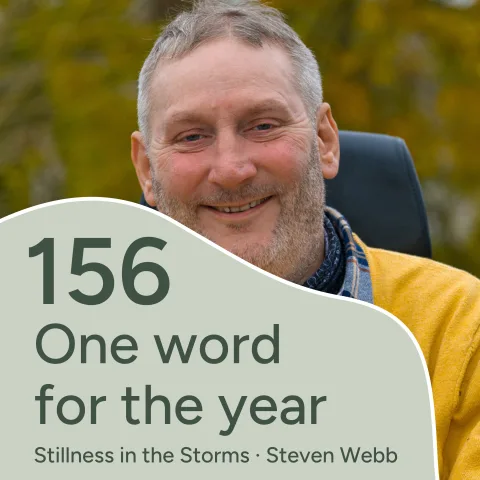
What does it mean to be still while everything around you is a storm? Picture a bar brawl, and one man at the end of it, quietly drinking.
That man is not asleep. He is more awake than anybody else in the room. Reaction happens underneath us, fast, before the compassionate part of the brain gets a look in. So stillness is not detachment, it is being connected enough to see the trigger arrive. If somebody presses a button and nothing happens, eventually they stop pressing. At eighteen I broke my neck in a swimming pool. At forty I was sat in a wheelchair in a supermarket doorway with maxed out cards, drinking myself to sleep and blaming the dog, the neighbour and the president. Everybody except me.
One thing to try: Next time somebody presses your button, notice the gap before you react. That gap is the whole practice.
In this episode
(1:42) The brawl, and the man at the end of the bar
(3:09) Reaction happens before you get a say
(3:46) The compassionate part of the brain arrives late
(7:43) Forrest Gump and the dog mess
(8:59) The fire brigade has two jobs, not one
(11:29) Press the button and nothing happens
(14:34) Christmas lunch, politics, and letting them be right
(16:28) Eighteen years old, and the swimming pool
(17:44) The supermarket doorway and the maxed out cards
(20:02) Everybody was to blame except me
Support the podcast and join the Weekly Calm: stevenwebb.uk
Thank you for listening.
Steven
The story behind this one
This is the first episode. It is the one where I say what stillness actually means and why I am the one saying it.
Picture the old western. A fight breaks out in the bar. Bottles going over heads, everybody swinging. And at the far end there is one man quietly drinking, who looks like he has not noticed a thing.
He has noticed everything. He is the most awake person in the room. When somebody finally comes for him he stands up, says the one line everybody remembers, and walks out without throwing a punch.
That is the picture I had in my head when I named this podcast.
Because reaction happens underneath us. Something lands, and the older part of the brain flicks through the filing cabinet, finds what it did last time, and does it again. It did not kill you last time, so it must be right. It has no idea whether it was kind. The front of the brain is where the compassion and the ethics live, and it is slower. Stillness is giving it time to get there.
So no, still people are not detached. They get triggered like everybody else. They have simply learned not to put more fuel on the fire.
There is a family version of this that everybody knows. The barbecue. The Christmas table. Politics comes up, or that one relative who knows exactly which button to press.
They know how to press it. You are the one reacting. If they press it and nothing happens, and press it again and nothing happens, sooner or later they stop pressing. My sister still triggers me. That has not gone away and I doubt it will. What has changed is that I can see it coming.
Leave all your cocked guns in the field.
Hafez
Now, who am I to say any of this.
At eighteen I dived into a swimming pool and broke my neck. I have been paralysed below the chest ever since, with paralysed hands. Around the same era I attempted suicide, and I am genuinely glad I failed, because it has bought me another thirty years.
But the accident was not the thing that broke me.
That came at forty. Single, broke, credit cards full. My chair broke down in the doorway of a busy supermarket. A grown man in a wheelchair, blocking the entrance, crying his eyes out, with a security guard crouching down asking if he was all right.
That was rock bottom. Not the swimming pool. The supermarket door.
I was drinking to get to sleep, and asking my carers for bigger and bigger measures, which got humiliating fast. It did not even work. I would be awake two hours later anyway.
And I was blaming everybody. If it was not the government it was my dog. If it was not the dog it was my neighbour, or my finances, or the president. The whole world had organised a conspiracy against me. The only person with a clean record was me.
What it taught me
Every book I picked up said meditate. I put every one of them down, because I was a thinker and meditation clearly was not for me.
I read it enough times that eventually I thought, fine, I have got nothing left to lose.
It was a disaster for a long while, until a teacher pointed out what I had wrong. Meditation is not sitting there with an empty head. That is sleep with your eyes open. There is focus in it. There is thought in it.
The other thing I learned is the difference between the two jobs. The fire brigade puts fires out, and it also goes round making sure fewer start. Most of us only do the first one. A foundation of stillness is doing the second one on your own life.
You will not stop the storms. Life still turns up at four on a Tuesday afternoon when you are not ready. What you get is smaller fires, and less to apologise for afterwards.
Anger is fine. Violence is not. Be triggered all you like. Just do not act on it.
Questions people ask
Is stillness the same as not caring?
No. It takes more attention, not less. The calm one in the bar is not zoned out, he is the only one tracking the whole room.
Do I have to stop getting triggered?
You will not, and that is not the goal. I still get triggered by my own sister. The goal is the gap between the trigger and what you do with it.
Why should I listen to someone who is paralysed about a calm life?
Fair question. I am not offering you a life without trouble, because I have never had one. I am offering what I found at forty, sat in a supermarket doorway with nothing left, and what has kept me steady since.
Does it start with fixing the people around me?
That was my plan too. Get rid of the difficult ones, sort the world out, then be happy. It does not work in that order. It starts inside, which is annoying, because inside is the bit you cannot blame on anybody else.
Read along
The transcript
It follows the audio. Press any line to jump there.
mindfulness · present-moment · resilience
Read the transcript
Hey, welcome to Stillness in the Storms, your podcast to help you through the most difficult times in life, as
well as brush off those awkward moments, so you can live your life with inner peace and a calmness that
no one can take away from you. I'm Steven Webb, your host, and thank you for joining me today.
On this podcast. We're going to talk about what the podcast is about. What does it mean to have a
foundation of stillness? And who am I, your host? So we can get to know each. Other a little better.
How can you get the best from this podcast? So
first of all, we're going to. Start, you know, how are you um How are you doing? And thank you
for joining me. And one of the most precious things we have is time. So I want you to know
how much I appreciate your time spent with me right now. So
what does it mean? What is this podcast about? Stillness in the Storms? Well, we all, we all like to.
Live a still, calm life. This energy of
you know, we all like that calmness. We all know the wise person, that when everything is going
wrong around them, they don't react and then regret it later. And
you often see that in films, especially old Westerns, when you have a
bar and a fight breaks out and someone comes in and says something and then someone is triggered and
reacted. And then you suddenly got this fight in the bar between everybody you've got everybody hitting bottles over the.
Head of each other and one person punching another person, and it's just a brawl between everybody.
But then you have this one guy at the end of the bar that's sitting there
swigging his whiskey or whatever he's doing. And it seems like he's totally disconnected, not knowing what's going on.
But it's quite the opposite. He knows exactly what's going on and he's keeping an eye out. And then someone
comes over near him and tries to involve him in it, and he stands up right at the last minute
and
without throwing a punch, he has the final say and walks out. And it's what he says and what he
does is we what we remember. And that's what we all want to be. We want to be that
shade
when everyone else is hot and everyone else is struggling. We want to be that voice of wisdom.
But Stillness in the Storms is more about not just providing for others, not just giving a
stillness to a situation. It's about you being able to remain calm
and respond in an emotional, skillful, loving way through understanding.
So in order to have this stillness that I'm describing, we have to Be more
connected and more awake than ever before. Because the reaction is very subconscious. You know, something
happens. Our subconscious mind flips through the fighting cabinet and it finds what it did last time, and then it
repeats it it didn't kill you last time. So it must have been the right thing to do. The subconscious
mind has no moral way of knowing what is right and wrong. It just repeats the same habits.
Whereas the human side, the front bit of the brain, has
compassion and caring and morals and ethics and all the things that we should and shouldn't do.
And predominantly, it's just more compassionate and understanding. So
it's more about having a stillness and being able to respond, is moving to the more human side of the
brain rather than the reptilian, habitable brain. So this podcast is about how can we
do that? And I'll be interviewing people that have managed to do that a lot of the time. Nobody's perfect.
I've yet to come across Zen masters or anybody that spends all of their time in
this perfect state of absolute calmness. You know, we're all triggered. If anybody says they're not triggered,
well, they're probably disconnecting in some way.
So we'll so yeah we'll be talking to um hopefully some Zen masters, some other spiritual teachers, and
other
people that have managed to
generate their emotional wisdom um and to grow a life of. I.
I can't think of another word, but just a life of stillness and calm and compassion and in a loving
way that brings this
calm to every situation. So we'll be talking to them and seeing how they do it and what tools and
tips they can have for all of us that are on the journey. And we're all trying to figure out
these triggers and figure out why we react and what we're doing um and we're trying to figure out how
not to react and then regret it later, because that's very often what we do. And that's what living a
life of inner peace is, not having to regret it later, because we created that gap between what arises and
how we respond.
So we're talking to lots of people and getting their
advice and tools of how they do it. At the end of some of the episodes, there will be a
small guided meditation, not all of them, depending on the interview and things like that um So yeah, you're gonna.
There's gonna be great value in this podcast, and there's gonna be. If you want to live a more calm
for more peaceful life, if you want to generate your own inner peace and take that to the world,
then subscribe to this podcast. This podcast is for you.
And I'm interested in your questions. I will answer any of your questions.
The direct questions I will answer on my Patreon website.
And the reason why I'm going to do that is because the podcast, I'm going to ask you for support.
I'm going to need support to do the editing, do all the other things. As you'll find out, I'm paralysed
from the chest down. So these things take me a lot longer than normal. So I am going to ask
for. Support. To help me with those things.
But let's move on with today's podcast.
So what does it mean to live a foundation of stillness? What does it mean to have this ability to
stay calm in the storms of life? And ultimately, what does it give you and the
people around you? What benefit do you have from this stillness? Well, storms happen. Life
happens. You know, that old bumper sticker, you know shit happens you know, from that film.
It wasn't from the film. I just love the way they put it in the film um with Forrest Gump.
And let's
see, he was walking and he stepped in some dog poo on the floor and someone said, oh, you
just stepped in. He just stepped up he goes yeah shit happens And that's right. You know, you cannot stop
life happening. You know, life just has
got a habit of,
you know, coming out and hitting you 4 p.m Tuesday afternoon when you're least expecting it. So what we do
is we work. On ways in which we can be ready to respond to it
rather than be in reaction mode. And if you take a progressive government and a reactionary government,
one. One is always trying to put out the storms,
you know, one's always trying to run around and get, sort out the leaks afterwards, sort out the controversy,
the things that are said and all that. That's a reactionary government. Another government is very proactive. Well, what's going
to happen over the next 10 years? How can we help to prevent it? And how can we mitigate most
of these circumstances?
And another example is like very much like the fire brigade. They have two roles. They have the role of
putting out the fires when they're burning, and they have the role of going around and trying to put as
much in place as possible to prevent the fires. The
idea is to have a balance between the two. And living with a foundation of stillness means that you're
aware that fires can happen and you're ready for them, but you're also doing as much as you possibly can
in order to prevent them from happening, you know, because you're not going to stop them. But you can reduce
them, and when they come along, you can reduce the effects of them by not reacting.
So when we respond, we very much don't regret it later. We have family. We don't fall out
with family. We don't say things that we should not have said. We do not get personal. We do not
take it personally. We just allow these things to happen and we stop fighting it you know Very often where
a situation arises and we fight it so, like, we just don't want it. I don't like this situation.
I don't want to be part of this situation. How can I stop this situation? Well, very often the situation
is already here and it's arisen.
So this is what living with this stillness means. It means that this has happened. How do I
get through it? In the best possible way for myself, in
the most skillful way for myself and everybody else around me. How can I not put more fuel
on this fire and I think that's what it comes down to more than anything else is a life of
stillness is not putting more fuel on the fire. You imagine how many times do you go to a family
barbecue or Christmas lunch and you'll sit around the table and politics comes up or that family member that you
don't overly get on with because they always push your buttons and it's like, I can't stand them they're always
pushed the wrong buttons and they know how to trigger me. They know how to do these things. Well, that's
on you. It's not on them. They might know what buttons to press, but you're the one that's reacting to
those buttons pressed. Someone
can press that button and nothing And
they press the button again. Nothing, nothing, nothing. In the end, they'll give up pressing the button. Right.
So whose fault is it when they keep pressing this button and you keep reacting? Yeah,
I'm sorry to say It's your fault, you know, if I keep being triggered, which very often, for many, many
years, me and my sister. Oh my God, she used to trigger me and she still triggers me now. The
triggering doesn't go away She still presses those buttons. And knowingly or unknowingly, I don't know. That's not
my concern that's that's her That's her karma. But
I know that I don't have to react when she presses those buttons. The triggering still happens. But I have
awareness of it and I try my best not to. I'm aware of her triggering me. So therefore, with this
awareness, I can almost preempt it.
There's a. There's a really good Poem by The Persian poet. 14th century Persian poet.
His short name is havis and I cannot pronounce his long name. So
let your intelligence begin to rule Whenever you sit with others using this sane
idea, leave all your cocked guns in the field far from us, one of those damn things might go off.
Let your intelligence begin to rule Whenever you sit with others using this sane idea leave your cocked guns in
the field far from us, one of those damn things might go off. What he's talking about here is he's
talking about our triggers. He's talking about, you
know, if you're going to into negotiation with
someone that you really aren't fond of, you have a really bleak opinion and belief of them,
you don't agree with what they're doing. But you have to go in and negotiate some kind of deal
it's Leave your opinions and beliefs, leave your ignorance behind,
and go in there in a way that you can bring some kind of productive progressive
calmness and stillness in the situation. Because we very often go in there with
what javier says is with our cocked guns ready to fire. We go in there angry. We go in there
with an agenda.
And although it'd be very difficult to not to have any kind of agenda, we have to go in there
with
a sense of calmness and stillness and understanding and compassion. And this is what we do when we go to
barbecues or when we go to Christmas lunch with family, you know, when they start talking politics or when they
start thinking, you know, allow them to be right, allow them to have their say, you know, be triggered by
it, but don't do anything with the trigger. It's like anger is fine violence is not.
That's what it means to live a foundation of stillness. You know, don't think anybody that sat there still calm
um don't think anybody that is really calm and still, that
they're simply not aware or they're disconnecting or they're zoning out, they're very much, very often
quite the opposite to that. They've been triggered. They're just as angry. They just got just as much of these
things going on inside of them as you have or anybody else but
they're learning to control that fear that those triggers, those experiences in life. And
we'll dig deeper into this on the second podcast about triggers and what they are and where they come from
and what we can do about some of these things. But I want to move on to who am I?
Who am I to be sat here talking to you on this podcast? And it'll give you a sense of
Why I do this podcast and why I do what I do, why I'm an inner peace mentor. You
know, I've had lots of experiences in life. You know, I've been bankrupt, I've attempted suicide. You know, it's one
of those things that I'm really happy I failed at, um, it was over nearly 100 on a workout now
for my age.
Yeah, coming up 30 years ago now. So I've had 30 years more life because I failed at that.
At the age of 18, I broke my neck. I dived into a swimming pool and ended up severely paralysed.
And you can hear more about my story on StevenWebb.com.
um and my story would grow as the podcast grows and I will share more and more experiences from my
life. But that wasn't the big thing that pushed me over the edge of my life. It wasn't the thing
that, you know, spent most of my life teetering on. Between having a great life and feeling
really quite depressed. There was times when I really just did not want to carry on and times when my
life was absolutely amazing. You know, that's life. You know, it is a fluctuation, it's a balance.
But at 40, I hit rock bottom. And that was the thing that did push me over the edge
I
found myself single. I found myself broke. My chair had broken down. I was sat in the shop,
sat in the door of a supermarket and my tire had burst.
And this is a 40 year old grown man bawling his eyes out, not knowing where to go. I had
no money on my credit cards, they were full. You know, my, my finances were an absolute disaster. My life,
I felt, was a complete disaster. And there I was, sat in a wheelchair in the doorway of a busy
supermarket, crying and a security guard saying, you know, you're right, what's, what can we do?
That was the final straw really of my rock bomb That was when I realised I had to do something
in my life. So I,
I fought back after
trying to shut my mind up because I
just finished a relationship or they finished a relationship with me. And at that point, my
mind was working overtime. I was thinking far too much. I was reacting to everything in life and all I
was doing was trying to get through the day. If
I got through the day, at that point, it was a success. But it wasn't really because I didn't look
at it as a success. I looked at my life as it sucked. You
know how you know I was very much, if there was a question in my mind, it was, how are
you Going to kick me today life.
So I was really feeling depressed all the time. I was drinking alcohol to go sleep um I
was drinking more and more of it. And not only that, it was in. It was starting to be embarrassing
asking the carers to put more and more alcohol into the glass just to be able to go sleep.
Of course, my sleep wasn't working. I was waking up two hours later and all that. It was just. So
I started reading and I started seeing everywhere about meditation, about stillness and inner peace and all that. And I
was like, what? I need to sort the world out. Once this world's sorted out, I'll be all right. Once
I get rid of the assholes In my life, once I get rid of the people that not treating me
with respect, once I get rid of all these people that are tagging along and dragging me down. You see,
I was in the blame game, and I was blaming everybody for everything. You know, if it wasn't the government,
it was my dog. If it wasn't my dog, it was my neighbour. If it wasn't my neighbour, it was
my finances or it was the president or, you know, it was. Everybody was
out with a big conspiracy to get me. The
only person that wasn't to blame was me. Me um And then I realised that it was stemming
from inside of me.
So there's a lot more to my story in regards to, you know, I did find a solution. Every book
told me to meditate and to look deeper inside and to sort out my triggers and sort out my shadows
and to. To not only wake up, to start cleaning up. Of course, I did not believe any of that
because simply, simply put, I couldn't stop thinking. So meditation wasn't for me. I was a thinker
um But it wasn't until I read it again and again and again that at some point I said, fuck
it, I better give it a go. I got no choice now.
Um, so, yeah, I gave meditation a go. It was what I thought was a complete disaster for a long
time. And I found teachers to help me, guide me. And I realised meditation wasn't about sitting there and not
thinking. You know, that's. That's sleep. That's deep sleep um while you're awake. Even in meditation,
there is focus and thought and concentration But we'll talk about that more because it's a big part of
stillness We'll talk about that over the coming weeks. And I want to wrap today's podcast up, and I want
to tell you how to get the best out of the podcast. First of all, subscribe. Subscribe. And leave an
honest review. Let me know. Head over to connectwithsteven.com that's why I'm pointing over
there. If you're on my Patreon website I'm you can see videos of these podcast Not only just my
audio, you see the outtakes and also I'll answer your questions directly. Whatever you're struggling with regarding inner peace.
Head over to connectwithsteven.com and all the information is there. And that's my
podcast, Stillness in the Storms of Life let's let's get to a place in life where we're not buffered around
by anybody else, where we generate the stillness inside of us that we can bring the best compassionate
understanding and love to any given situation.
You know. But most of all, thank you. Your time is the most valuable thing you have. It's the one
thing that you cannot get more of. It's the one thing that seems to disappear more the older we get.
So I really appreciate you being here on this podcast with me here today. Thank you. Take care. Love
deeply, be still, and above all, do what's right for you.