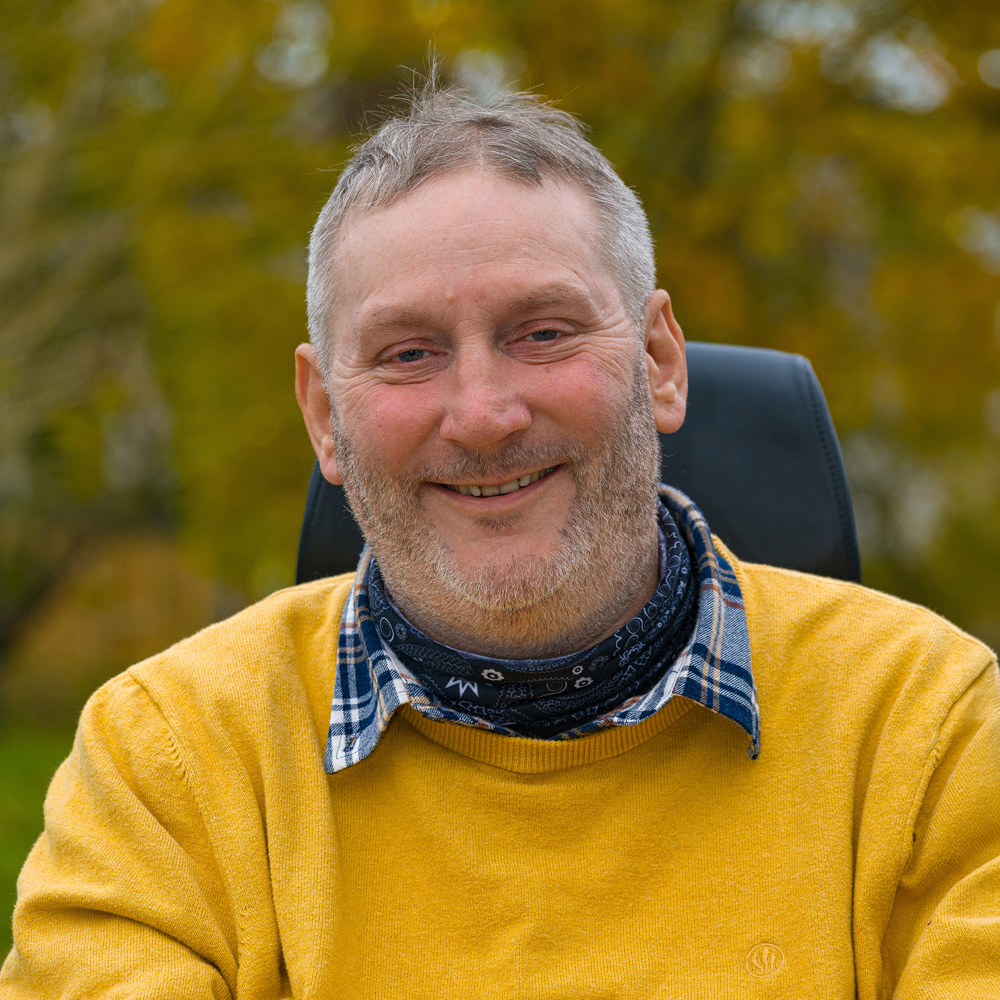
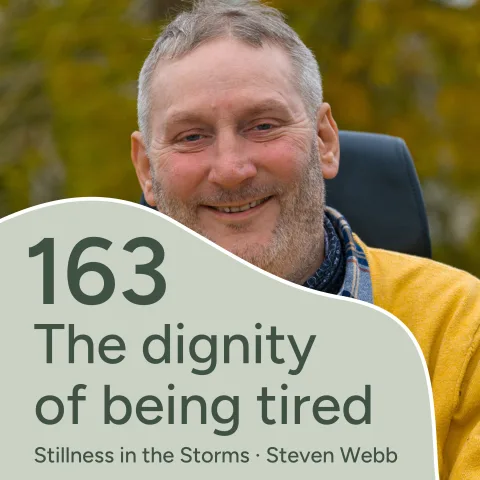
Why do panic attacks arrive out of nowhere? They do not. Mine turned up on the way to buy a poppy, and it felt like the whole world was ending.
I thanked him, went round the corner, and was suddenly terrified. I have not had one since, partly because I understand it a bit now. I am only a chapter ahead of you. A panic attack is a human with a lot of emotion and nowhere to put it, and it can mask as a heart attack, which is why paramedics take it seriously. Your anxiety is not broken. It is a tap turned up too far.
One thing to try: When it comes, do not rush to fix it. It does not need fixing. It needs hearing.
In this episode
(0:01) The email that started this episode
(3:35) Round the corner on the way for a poppy, and terrified
(5:22) Only a chapter ahead of you, which is why I can explain it
(7:19) Ten minutes somewhere too loud, and needing to leave
(8:49) What a panic attack actually is
(10:02) It can mask as a heart attack, and often does
(11:40) The four year old at the door who has to tell you something
(16:40) Your anxiety is your companion, not your enemy
Support the podcast and join the Weekly Calm: stevenwebb.uk
Thank you for listening.
Steven
The question this answers
Why do panic attacks arrive out of nowhere?
They do not, though it certainly feels that way. Somebody emailed to say hers had started in middle age with no warning, and it reminded me that mine turned up on the way to buy a poppy.
The heart of it
Your anxiety is not broken. It is a tap turned up too far.
Getting these in your thirties and forties, having been fine at eighteen, is not a decline. It is what happens when you start feeling things more.
I was in Truro with one job. Buy a poppy. The man selling them did not take card and I had no change, which is an ordinary transaction, and I was mortified.
I thanked him and went round the corner, and it landed. Everybody could see me. Everybody was looking. My breathing went, my heart went, I was hot in the cold. I stopped on the pavement and pretended to be on the phone.
I sit on a city council. I have spoken to full rooms and done the toast at dinners. And I could not go into a supermarket and buy a poppy.
I have not had one since, partly because I understand it a bit now. I am only a chapter ahead of you.
Ten years earlier I watched my daughter's mum have one, hands numb, thinking it was her heart. The paramedics came, checked everything, said it was probably a panic attack, and I dismissed it entirely. I was completely ignorant.
They mask as a heart attack, which is why paramedics take them seriously, and they took her in and she was clear.
Why later in life? Because you go deeper. You have children and learn to feel what they feel, and the grown up version of empathy is compassion, and then you are picking up a whole room rather than looking for the bar.
A panic attack is a human with a lot of emotion and nowhere to put it.
Which is exactly what a two year old is doing. We badly misnamed those years.
Round the campfire, the anxious one who says put the fire out and be quiet has just saved everybody. That is the voice you are trying to evict.
One small thing to try
When it comes, do not rush to fix it. It does not need fixing. It needs hearing.
Say hello to it. Thank you for the warning, I have taken note, we are alright. Push it away and it shouts louder. Give it your whole attention and it decides it was right to shout.
And one line to keep: I sometimes feel anxious, but I am not anxious. Nothing that comes and goes is what you are.
Questions people ask
Is this medical advice?
None of it. I am not trained and I say so twice in the episode. If this is regular or severe, see a professional. This is the philosophy sitting alongside that, not instead of it.
Why did it happen over something so small?
It was not about the poppy. It was a lot of emotion with nowhere to go, and the poppy was simply what it landed on.
Is there a meditation with this?
Yes, Your Anxiety, Your Companion, over on Inner Peace Meditations. It is about making friends with it rather than removing it.
Read along
The transcript
It follows the audio. Press any line to jump there.
anxiety · stress · breath · mindfulness
Read the transcript
Hello. I'm Steven Webb and this is Stillness in the Storms. And last night, I got an email and she
said about the way she now has panic attacks and anxiety and the way it suddenly started
manifesting in her life,
getting near middle age. I hope she doesn't mind me saying that. Still quite a bit younger than me. and
I just wanted to do a podcast today about it because it reminded me of my story and what
happened to me just a few months ago and my ignorance about 10 years ago about what panic attacks were.
So that's what today's episode is about. And I'm going to give you some hints and tips and how what
to do when you do have a panic attack and how Buddhist and Eastern philosophy and that kind of teaching
would tell us how we use mindfulness and meditation all that. But just before that, I'm not a trained professional
and that's important. Anxiety, panic attacks and serious stress should not be taken lightly
and take this podcast as literally a little bit of value to add to it, but go and get
professional help. Please don't take this as professional advice. It's just the way Buddhist and Eastern traditions
and those kind of things. And what I've learned to do with mine and how I deal with mine, it
may not work with you. But just before that, I want to thank these awesome people for making the podcast
possible. Adi and Verne chess mark
keula adele asia brian and this set Thank you, guys. You are
all awesome and and so so many arrows that donate over time and support monthly. And
I've even got a few people joining on my stillness on the stillness in the storm Steven Webb Facebook page
now as supporters. So just thank you to everybody. It really does make a difference. But having I'm going to
go right back into it because we've got a lot to cover in this podcast, and my attention span is
about maximum about 30 seconds. So trying to do a 20-minute podcast is it's not easy.
So I was really touched by this email. So this is why I'm doing this podcast today. But wait, what?
I'm someone that has been sorting myself out for how many years? I've been meditating, I've been doing mindfulness, I
read books, I practice all these things and yet I had a similar thing happened to me for the first
time in my life just I don't know, what five six months ago. So I was at Victoria Gardens. I
was with a friend and I had to head back into town and pick up a poppy. That's all I
had to do. So with my enthusiasm, I drove back into town in my allegedly wheelchair and I come across
a guy that was selling poppies at the bottom of one of the streets and I went over to him
and I said, do you take a phone payment or a card payment? And he said, no, I don't.
And I realised at that moment, I did not have any change. So that's a perfectly normal transaction thing
to do. And for some reason I was so embarrassed about it. So I thanked him and I went around
the corner and I was on the way to a supermarket where I knew I could get a poppy. And
I just felt overwhelmed. I felt terrified. I felt like the whole of Truro could see me. I felt like
everybody I drove past was looking at me. My breathing started to go heavy. My heart started beating. I was
hot and yet it was quite cold. And I had I just stopped on the pavement and I pretended I
was on the phone. I messaged my friend and said, I don't know not sure what's happening. I can't go
and buy a poppy. That's all I had to do. And I just did not know how to do it.
I knew how to do it. I just did not I was so terrified of doing it. With all the
anxiety, just the thought of going into a supermarket and having that same transaction, no, sorry, we need
change or something terrified me and it, you know, I'm paralysed anyway, so I know what it's like but it
completely paralysed me Yet when I was younger, I used to go out and drink. I used to go out
and do different things. I'm on the city council. I can talk in front of groups of people. I've spoke
to large dinner parties. I've done the toast of an evening. I've spoken from alone to people
And yet, here I was. I couldn't go and buy a simple poppy I was terrified. So I drove home
immediately. And, yeah,
that that feeling of complete uselessness didn't go away for a
good few hours.
And here I am after all this work and I know all these things, I have all these tools and
all under my belt, but why me? I'll tell you why. Because I'm just a page ahead.
I'm just a chapter ahead. That's all. So I haven't had it since. Maybe
partly because I understand it a little bit. I know how the body and the mind works. It doesn't mean
I'm immune against the effects of the body and how it happens. But just understanding it
means that I may be able to see the signs next time and and address it a little bit quicker
or listen to it a little bit quicker and things like that. So
it comes down to why
would be our panic attack, why wouldn't we have all these things happen to us when we're younger, when we've
got this ignorant confidence and all that. And then suddenly we started getting them, you know, 30 plus,
40 plus years old. And suddenly, we're frightened of mixing lots of people. We're fine Well I think it's because
when we get older, we start to go deeper. We start our spiritual journey. We have children. We grow more
compassion. We grow more understanding. And if you have a child, you have to feel what that child's feeling
we We develop empathy And then the grown-up version of empathy is compassion. And
then as you grow, you become deeper and you feel things more. You suddenly become aware of the world around
you rather than just all about you. So when I would walk into a party or a pub or something
at the age of, I don't know, 18
my thought was where do I get a cigarette or where do I get the pint and just sit down
and, you know, I didn't really think about what everybody else was doing, I was in my own little world
Whereas now when I go into these places, a pubs terrify me. I was in one for 10 minutes the
other day and it was too loud. I said to him can we just go over and get the meal
because no, I don't want to drink I can't stand it's too loud for me too many people for me
And I think it's because we pick up on energies of people. And I don't mean this in a woo-woo
kind of energies and auras of people, But there is an energy people have and there's an energy of a
place house and the energy of the people around us. And here here you are in a busy car and
busy traffic and well, I don't have the car is busy busy traffic or you're in a supermarket and you've
got so many so much stuff going on and The body just reacts Just like it would have done
100 200 300 000 years ago to reacting to a bear in the forest that You know, instant anxiety
run like hell. Whereas now we're in a car, we're in a traffic jam. We're worried about all these different
things. And we got our child with us and we got other things going on, just like me. It was
nothing to do with a poppy It was to do with my me being overwhelmed by my emotions. And
I think that's what so we have all these emotions coming up like a two-year-old has and say what do
I do with them? And a child doesn't know anything else. So they got to let off steam. They got
to have a tantrum. They're terrible tunes All those things which is so badly misnamed. It's not terrible tunes it
should be understood that it's just a human having all these emotions, but they don't know what to do with
them. And that's really what a panic attack is. And my ignorance, when I witnessed by um I hope
she doesn't mind my camera's mom had a panic attack. It's about 10 years ago now. And she thought she's
having a heart attack. Her hands went numb. She could barely stand up um I called an ambulance. They come
out quite quickly as opposed to today different story in the Uk um And she
was on the floor. She had to put her legs up. And the paramedic said you know, we've tested everything.
It's probably a panic attack. And I was like, ah, you'll be all right it's fine I I was like
totally dismissing it. My god, how was I?
You know, some years later, after more more more work, I ended up having one. It's so strange.
And so where was I go with the story? So we can be really ignorant and these panic attacks can
be really, really serious. And they can mask just like a heart attack and things like that. The paramedics did
take her in and she was all clear it was all fine. But we are so ignorant to how much
feelings can overwhelm us. You know, we do know now that stress will take away the feelings in the
hands and feet just in case you have to fight that bear and just in case it cuts the hands
or something or you cut your feet running away from it. That's the best thing it can do. But we
don't know these things because we're not educated or we don't understand them. So this is where
I think the Buddhism and Eastern philosophy can really come in and help us to
understand. So when feelings arise, just like I talk about the funnel, they come out of the point
of origin and you have a thought and you know, a feeling, and it grows, it grows, it grows, we
can intercept it and go, well, wait a minute, why am I feeling anxious? What is happening now? And then
we can choose not to do anything with it. So first is to understand that the experience, though deeply troubling,
carries with it a profound opportunity for growth.
You know? And this growth with insight.
Zen Buddhism teaches us about impermanence of all things. Anika is called. You know? And it invites us to
observe our experiences without attachment or aversion. So observe that, message that anxiety has given
us and just
don't be attached to it or don't try to push it away. It's like the four-year-old coming in and going
I gotta tell you something I gotta tell you something. And we're like, no, go away. We don't want to
hear it. Or we're like, okay, tell me everything. This is really, really bad. Keep telling me. And he's like,
yeah, I just lost my train, my toy train. So that attachment to it, like it's really bad or that
aversion push it away. Either way, that four-year-old's going to really try to get your attention. It's either going to
be make it worse when you push it away or it's going to make it worse by listening too much
So it's that balance between when these your anxiety, when that protector comes up
ah, hi again. You're here to help me. This is what's happening at the moment. It's all fine. Everybody else
in the other cars, everybody else is not really paying any attention. They don't know what's going on. They don't
know how my heart is beating and things like that. You know? So when the panic attack approaches, rather than
trying to push it away or cling, you get a sense of control. You might gently observe it. Notice the
sensations, the thoughts, the emotions, labeling them good or bad. This isn't easy. And
I wouldn't label good and bad, thinking about it. Although I've just said that. I would label them as healthy
or unhealthy or, you know, do I need that in this moment or do I not need that? Because the
minute we say good or bad, when we call them bad, we're then trying to push them away again. But
it's a practice of compassion towards yourself. And really it is an opportunity for growth. It's an opportunity for real
compassion towards yourself. Some self-love Because all these voices are coming and going. They're not permanent. And,
you know, you can use the practice of mindfulness to develop what's called bodhachitta And where the mind's
enlightened, where it seeks the well-being of everybody. So I'm aware of what's happening and I'm
aware that other people have these things. I'm not alone in this. And you can breathe in the you can
picture it as I'm breathing in the anxiety and I'm breathing out the love and understanding.
Breathing in calm, breathing out relaxed, like I do in my meditations.
And just that breathing and all that and focusing your breath on just doing that can really help. And there's
a practice called tongue learn that as you breathe in this painful, transforming,
pain that you've got this opportunity to breathe it in and then you breathe out just compassion and love. Because
so many of us are going through these things. I'm not here to diminish or to reduce anybody's
anxiety or anything like that. I'm just saying you're not alone. You
know, it's the way our bodies have evolved. You know, we're not a culmination of just what we've done in
our life. We're a combination of billions of years. We're a combination of 90 billion humans that have come before
us that have all evolved all these different things. We are the story of all of that.
And luckily, we've got this anxiety and we've got these other things that warn us about these fear and things
like that. Because if we didn't have them, we wouldn't have survived as long as we have.
And like I say, if there's if there's a group of you in a forest and you've got that really
positive person that doesn't worry about anything, never gets anxious, and the other person that is quite anxious and worries
about everything And there's a loud noise suddenly in that forest. And the person that's really happy says, don't worry
about it. It's fine we just carry on. Carry on playing music, keep drinking, put the fire a bit higher.
Well, if that loud noise was something you should pay attention to, you're all dead. On the other hand, that
person that does have the anxiety, is in tune with their anxiety says no put the fire out. Shut up,
everybody. Stop. Let's find know what this is. They've just saved the day. So it's not a bad thing to
have these um voices inside of us. We're just not aware of them when we're younger. So the fact that
we get to an age of 30, 40, 50, 60, And not all not everybody gets it, but this is
about the waking up. You know, we grow up. The waking up is realising we have these feelings and realising
that we don't have to do anything with it, but they're valuable to us. It's very much important that we
do listen, but we don't give too much weight to it. And if you resist it, it's going to keep
coming up. The more you resist it, the more you push it away, the more that anxiety is going to
get your attention. And I did a guided meditation. I released it last week.
And it's called, Your Anxiety, Your Companion. And it's about making anxiety your friend
because it is your friend it should protect her It's your friend. It's the it's a it's a little being
inside of you, one of your little voices that is just going, hey, something might be wrong. And then you
go, ah, okay. Thank you for that. I've took note of everything that's going on and we're okay.
And
then when you say thank you and recognise anxiety very often it I go ah okay No worries. I'll let
it just die back down again. Sometimes, they're a little more persistent. And another thing you can do with it
is just almost invite it and play with it and have a dialogue with it. And it might not speak
in um spoken language. It might speak in different ways and manifest in different ways in your body because it
doesn't have a voice doesn't have a mouth, so to speak. All these emotions evolved when humans weren't talking to
each other. We use our mouths for communication. We didn't have that for millions of years. We used our mouths
for other things. You know, primarily eating or chewing on stuff, I suppose um So
I'm just trying to think of all the things we can use our mouth for now uh Don't even go
there um So it evolved in a very different time. And it's still evolving today, but we don't
recognise it in our lifetime evolving because it involves it evolves over millions and millions of years. And we are
where we are we've got what we got. And resist the um eager to fix it. Your anxiety doesn't need
fixing it's It might be a little over sadness It might be a little eager it's not broken. Yeah. It's
just a tap that when you turn it on it flows a little too quick sometimes um so that's not
really a brilliant analogy, but it would do and I think you'll understand and like I said at the beginning,
I'm not a professional, but if I was to sum this up,
recognise that your anxiety is a friend.
And it's there to protect you. It's there to help you. And the fact that you're getting it now
is because you're going deeper. It's because you're caring more. It's because you're on the spiritual journey to less suffering.
And in order to have less suffering, we have to have deeper insight. And you have to go there to
do something with it. You cannot feel the pain unless you go there to feel the pain. And that's
why as we develop empathy and compassion on a real genuine spiritual level, that's why we
end up feeling things much deeper. We end up having better experiences, we end up experiencing joy more, we end
up suffering less, we end up more alone in the world because there's less people on this path and the
whole spiritual journey is about suffering less and you will suffer less the minute you realise that your anxiety or
these voices are there to protect us they're helpers they're guide us. They're not there to take control over you.
And you can even say to yourself the mantra I sometimes feel anxious, but I am not anxious.
And
I know you're not anxious, because if you're anxious, that's what you would be all your life. It comes and
goes, right? So therefore, you sometimes feel anxious. You're not anxious. It's the same as depression. When someone says, I
am depressed, I'm like, are you? You're a body? You can't change that. You cannot wake up to our morning
and become a rabbit. I'm sure there's people trying in the world nowadays, but I'm sure yeah
crazy world sometimes. Anyway, my mind wanders again, But you cannot change your body so you are a human,
okay? You
cannot argue with that.
But that doesn't come and go. But what does come and go is how you're feeling. A feeling of depression,
a feeling of anxiety, a feeling of excitement, a feeling of joy, they all come and go. Because you are
not any of them. They're just experiences. I
hope that makes sense and I hope this helps. And if you can support this podcast, that would be absolutely
amazing and awesome. Go to StevenWebb.uk. Otherwise, just head over to Inner Peace
Meditations podcast. Search around Google search for anywhere or go to StevenWebb.uk and there'll be a link to it on
there for your favourite platform. There's the last one I uploaded was how to make anxiety your companion.
And I hope that helps. But, yeah, if it is really bad and it is really persistent, please seek professional
help. I'm not a professional and I'm just a page ahead. That's all. And sometimes I'm not even that.