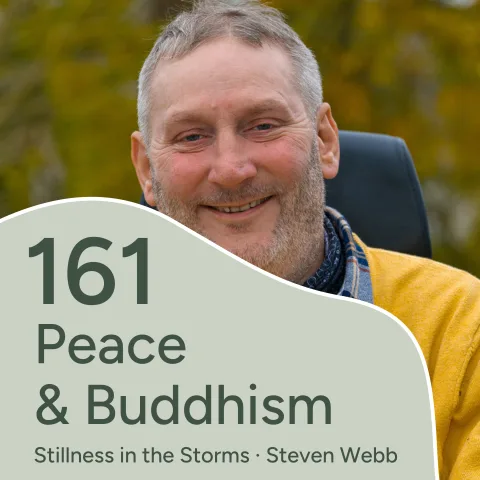
0:02 Welcome to episode 94 of Stillness in the Storms. I'm Steven Webb, your host, and it's the podcast that helps
0:10 you to find a little inner peace when you need it most. And on today's episode, we're talking about how
0:17 to suffer less.
0:18 Embracing change, especially on the spiritual journey. And I think the spiritual journey sometimes gets a bad rep,
0:25 and I think is misunderstood. So I'm going to explain it from what the spiritual journey meant to me, what
0:33 it means to me when I say we're gonna suffer less, but we might feel more pain. And we'll just
0:39 And talk a little bit about spiritual bypassing, what that is and why it's not a good idea.
0:49 So just before that, I want to give you a little bit of news. 100 episode is coming up and
0:55 I've got something quite nicely planned for that episode.
1:01 But I want to say thank you to everyone that gives me a virtual hug, which is effectively treating me
1:06 to a coffee, donating and helping with the podcast. Thank you guys. It's really deeply appreciated. Now then this week
1:13 I did something a little bit different. There
1:16 was a homeless guy that I've known for quite a while, and he's finding it difficult to see his screen
1:21 on his little phone, so, With your money I bought him a tablet, which is going to be
1:29 delivered in the morning, and I'm going to take it down to him. So that's what I've done with your
1:34 money this week. So I haven't been on social media. I'm not going to take a picture. I'm not interested
1:39 in any of those things. I just simply wanted to say to you, that's what I've done with your money
1:43 this week. So thank you, you know. It really does make a difference when you donate to this podcast. Not
1:49 only does it help me, not only does it help me, I'm trying to save up for my camera thing,
1:55 but it also, I want to reduce suffering, and if I can reduce suffering in some way, helping the guy
2:01 see his iPlayer or watch BBC, things like that, instead of just squinting on his phone you Know that's reducing
2:08 suffering. You can reduce suffering in all kinds of ways. It doesn't have to be deep and powerful and meaningful.
2:16 It can be a little way, you know, any old way. But let's get on with today's show. Let's talk
2:21 about how to suffer less embracing change on the spiritual journey. Now then, first of all, I'm going to share
2:29 a bit of my story. And the reason why I say that we can suffer less, but we feel more,
2:35 when I started on a spiritual journey, I did not know it was a spiritual journey. I'm not religious. I
2:42 don't believe in a deity up there, a God. I don't really, I don't know what I really believe in.
2:48 I just, I'm very much a science-based person. Just because I don't know it, just because I cannot prove it,
2:56 doesn't mean it's not real. So I'm not going to argue with you, but I do like to have some
3:02 kind of tangible reason for believing something And but if I feel something deeply, then I'm not
3:10 gonna deny it. I'm not gonna run away from it. So my whole practice really turned out to be Zen
3:17 and Buddhism, and that's because I just like mindfulness. I like to stop and smell the roses. So to use
3:24 a phrase that's probably well overused, but that is really, really important. When I'm driving down the hill, I look
3:31 at a leaf, I look at the colour and go, wow, look at the colour. How did that leaf fall
3:37 there? How did it get that journey? How did, and it just reduces my suffering because in the current moment
3:43 we're very likely not to be suffering. Right now you're listening to this podcast you're not really suffering.
3:51 You know, if you are really suffering and you're burning or something's really going wrong in your life right now
3:59 and you're taking time out to listen to the podcast, something's not quite right, but we feel like we're suffering
4:05 all the time, and we want to get rid of that suffering now. Then when I set off on my
4:10 spiritual journey, I wanted to get rid of pain, and there's a difference between pain and suffering. You know, just
4:18 to get rid of all the pain. I didn't want to feel anything anymore. I was, I went for a
4:23 particularly, I'm gonna say nasty, split up, but it wasn't a nasty split up. The split up was clean. They
4:29 didn't cheat or anything. There wasn't any kind of bad thing like this. It was just unexpected. And it boy
4:35 did it hurt really, really badly. And because they didn't prolong it, they didn't keep coming back to me and
4:42 things like that. They basically cut off all ties and I could not contact them. It was really painful and
4:49 I didn't want to think about it. I didn't want to think about what they were up to, what they
4:52 were doing, and that was my pain I literally couldn't sleep. I started drinking alcohol. I just,
5:00 I was doing anything to avoid pain. To the point that yes, I did contemplate suicide,
5:07 I contemplated not so much taking my life, but I contemplated
5:12 reducing my suffering to a point. I wanted to get rid of the pain.
5:17 Luckily, something stepped in and stopped me and gone, you know, maybe the pain won't be there tomorrow or the
5:23 next day or next year. Maybe. The wisdom I had for my teenage years and feeling a lot of heartache
5:29 brain, I kind of knew down the road that it wasn't permanent. But it feels like it's permanent when we're
5:35 in it. Right? Really does feel like it's permanent. So I, all I wanted to do was reduce my pain
5:41 and I ended up reading a book that was on my iPad, which is really unusual because I don't read.
5:47 I was diagnosed dyslexic when I was about nine years old by wonderful, wonderful teacher, Mrs. Hoban.
5:54 And. Incidentally, I've met up with her since when I become mayor. She contacted me and said, and when I
6:01 got that email through, in the email said, I think I to teach you. And I, and I went straight
6:08 to the teacher name at the bottom. Of course you do because you want to know who is just emailed
6:13 you they said, Mrs. Hoban. I was like, oh my God. Yes you did. You were the one that made
6:18 such a massive difference in my life and I just pulled my eyes out. I couldn't even read the email.
6:23 I'm wondering whether to share the story, but basically I just got to a new school. I was pretty much
6:30 bullied in that school. I didn't fit in. I used to sit at the back, very quiet. And the teacher
6:35 did something new that wasn't happening in my other school, and they would write on the board and when they
6:40 got to the bottom, they would scrub out the top and I could never keep up. So I was writing
6:46 it word for word. I could never keep up. And I was writing not what she was writing on the
6:50 board and. Having just been away in London or something. She told me the story when we met up just
6:58 last year. She was having been away in London or she knew a friend from London or something. They talked
7:03 about this dyslexia and she said, I think you're dyslexic And of course I am. I can read. So
7:10 when someone says, read that out to me, I can read it to you, but I don't know what I
7:15 just read. My brain cannot read it and understand it. So I can literally read a page and it might
7:22 mention the character and they might be going on a canoeing trip down the river and someone said, well, what's
7:28 the character's name and what were they doing? I'd be like, I don't know. It took all my focus just
7:35 to read it. So I tell you this story because I found a book on my ipad called As a
7:41 Man Thinker it's only about, I don't know 40 50 pages, but it was all about.
7:48 You're not what you think and you have control over what you do with your thoughts. So this book gave
7:55 me a profound, deep insight while me having to read each paragraph 20, 30 times, which was
8:03 brilliant because I fell asleep. So not only did I need to hear this about 20 or 30 times, I
8:10 needed something to fall asleep better than whiskey or alcohol that I was drinking at the time. Southern Comfort, it
8:17 was the whiskey Who drinks that? Okay. If you drink whiskey, I'm fine with you drinking whiskey. I just don't
8:24 like it. It's a bit strong for me. Southern Comfort and Coke, that's mine. Nice and sweet. You know, I
8:31 don't drink anymore. I don't drink anything anyway. You know me. I keep going off. So that was the start
8:36 of my spiritual journey. I didn't know it was a spiritual journey. All I wanted to do was reduce my
8:42 suffering and while reducing my suffering. It gave rise to my seven-year-old self to be able to care more about
8:49 others, to open my heart, to just have more compassion and empathy for others. Suddenly I was starting
8:57 to feel the pain of everything in the world, you know, a news story across the other side of the
9:03 world was really debilitating me. It's like, how can we live in a world like this that these kind of
9:09 things are happening? And then the spiritual journey went on to be less empathy and more compassion. So,
9:17 Compassion is about what's happening with them as opposed to us. Empathy, very much, and I speak about this on
9:23 a few other podcasts, if you search through my podcast,
9:28 empathy is about us. It's like what I'm feeling for you, it's about me. Ironically, we think it's about them,
9:34 but it's not. It's really about us, what we're feeling for them. So empathy is someone comes over to you
9:39 and says, do you know I'm really tired today. I cannot cope anymore. I need, and they look up and
9:45 go, yeah, I'm the same. So immediately flip it around. It's about them. What they think they're doing
9:52 is giving you like comfort. They think they're matching your feelings and all that and they
10:00 think they're giving you empathy. But they're feeling what you're feeling but they're not actually having compassion for what you're
10:08 feeling. It's kind of complicated and I probably don't explain it very well. Let me know if I do in
10:13 any of the comments. Email me, let me know. If I do go to StevenWebb.com and there's a contact me
10:19 if this makes sense or do I need to elaborate on it a little bit more. But anyway, going back
10:26 to the compassion thing, suddenly I had more compassion for people. I had a lot of deep empathy, but I
10:32 wasn't being pushed around by the empathy. It wasn't affecting my life quite so much. So if someone said to
10:39 me, and I'm not always like this, don't get me wrong. If someone kind of said I'm tired, and I'm
10:45 tired as well, sometimes I go yeah, I'm tired too. So I'm not always this saint with compassion all that.
10:51 In actual fact, very rarely I am this is why I'm working on it. You know, you may see me
10:57 as my life is all sorted, I'm all calm and think, no, it's, this work is ongoing. It's, you know,
11:04 it'll never be done. You never get there. But that's a whole different show. So I try to have a
11:12 little more compassion with it without the empathy pushing me around it Doesn't always work, but that's the genuine spiritual
11:19 journey it's having compassion without having to make it about ourselves. So what does compassion look like? And this is
11:26 where Brené Brown sums it up brilliantly in one of her books. You know, if you have empathy, you sit
11:32 back, sit down with them and go, yeah, I'm feeling the same. Compassion is, yeah. That must be tough
11:41 notice the difference. Just
11:44 imagine if you came over to me and said to me, oh, I broke my leg. And I, and I
11:49 come here yeah I broke my leg once. It's like, how does that feel but if you come over to
11:54 me and say I broke my leg. It's really painful. And I went, yeah, that must be rough. How are
12:00 you coping?
12:01 Boom. The difference is huge. One's empathy, one's compassion. And this is where the genuine spiritual journey has to
12:09 drive us more towards compassion and understanding for others as opposed to the first part of the spiritual journey,
12:17 which is about ourselves. And you have to go through these levels. You cannot just jump to one, and you'll
12:23 fluctuate, you'll do all this. But my spiritual journey, I wanted to reduce my suffering, but in reducing my suffering,
12:30 I felt things deeper, way deeper. So I just misunderstood the spiritual journey. And
12:37 that's my explanation. That's where I am suffering a whole lot less. I do suffer sometimes, but I suffer less
12:45 do I feel pain? Yeah. I feel huge amount of pain when I hear about terrible things that are going
12:52 on that boat that sunk with what? 300 people? How horrible. Imagine that. Imagine being one of them.
13:00 You're setting off on the most, one of these exciting but treacherous journeys. And then suddenly you're seeing everybody
13:08 around you dying and you go in the water. How horrible. And the people in the submarine, all of these
13:15 things and the people in Ukraine we feel for it all. But
13:21 do we let it debilitate us? Do we let it paralyze us in what we can do? No, there's nothing
13:26 I can do about that thing right now. And it's not a fight that I'm choosing to take on. I
13:33 cannot take on every fight. You cannot take on every fight. So you choose what fight to take on. That's
13:39 the genuine spiritual journey, and take on your own first, reduce your suffering, and then you won't put your suffering
13:46 onto others. Does
13:49 that, that's really important actually. I never thought about that. That wasn't even my notes. So deal with your pain,
13:56 deal with your suffering, and then you'll still deal with pain. You'll feel it so much deeper, but you're able
14:03 to help others you're able to hold space forever it's not a matter of fixing their pain. Someone comes to
14:11 me with a broken leg, I'm not a doctor. I'm like, yeah, okay, I'll fix that. No, they just want
14:16 someone probably to go, yeah, that sucks. How are you coping? That's healing itself I
14:25 Hope that makes sense. So the spiritual journey is about deeping your emotional spectrum. You feel things on
14:33 the other side much better. You feel more joy, you feel more excitement. The enlightenment, the heart.
14:41 Orgasms. It was called One Day to Me, you know, have you ever had a heart orgasm? I was like,
14:47 no, that's interesting. What's that they said, it's when you're sitting or you're driving somewhere, you're doing something and you
14:55 feel that amazing, and you feel this radiant light coming from within and you feel warm and you feel comfortable,
15:02 and it's just, everything's in place and you're in tune with the universe, and the energy is just perfect. I
15:09 was like, yeah, normally when I'm out in the car or listening to my favourite music and reminiscing and you
15:17 see a butterfly and you just feel absolutely great.
15:20 Yes. So apparently it's called a heart orgasm. Who knew? But yeah. Have you ever had a heart orgasm?
15:29 That's one way of like actually starting up a conversation. You just go to someone. Oh, by the wait how's
15:34 your spiritual journey going? Have you ever had a heart orgasm? That'd be funny, wouldn't it? If you ever bummed
15:41 into me in person, ask me that. That'd be so funny. A, I'd know you listen to my podcast, and
15:46 B, my face would probably just like, Okay. You know, our
15:53 chimp in our minds always go to that place doesn't it You know? Always does. Well, mine does. I'm projecting
16:00 now. But anyway, so what else is about the spiritual journey? So we deepen our emotion. We build a spectrum
16:07 of more joy, more pain, but we don't stay there very often. So we also build resilience. And the
16:15 resilience is, we know things will change, so we're okay with it because we know we've already got it. We
16:22 know we've already dealt with it. We know down the line things will be okay and it's not permanent. You
16:29 know, I'm paralysed just below my neck. And one of the things we're paralysed is your body functions don't always
16:35 work. And one of the most difficult things I go through probably once or twice a month is when my.
16:42 Now then, I'm sorry to give you this image, but when my bowels don't work properly and the worst case
16:50 scenario, and I'm lying on my bed and the carers have had to clean me up several times and it
16:54 is an absolute bloody nightmare. And I'm lying down I'm in pain. I got massive headache like It's just the
17:02 worst case scenario. And if my life was that, I don't know if I'd like to live, but I
17:09 know. I have the wisdom because of the spiritual journey, because of all these things that my life isn't that,
17:15 that's parts of my life. I that's an experience in my life. It's not my life. So I know by
17:23 lunchtime or by tea time, I'll be up in the chair and things will not be that bad, and it's
17:29 that simple. Okay? I don't know if it's that simple, but certainly more difficult for my carers. But yeah,
17:37 sometimes when I'm in pain, sometimes when life is really, really tough, I've got to remember that this isn't permanent
17:44 and that's that emotional resilience. So what is spiritual bypassing? Spiritual
17:51 bypassing is a concept by John Wellwood, and what John says is but basically it's denying
17:59 their emotions. Denying these deep emotions. I don't want to feel them because I want to feel joy all the
18:06 time. So I'm going to get rid of my pain. And I often come across these people that will hug
18:11 trees and I'm love and I'm this spiritual person that just feels happy. And how long does it last
18:18 you think to yourself, how many times have you done it that you're in a good place and you think
18:25 that's it, and then suddenly, boom rock bottom again? Because it will always, it will always come up, you know
18:33 you sure as hell as taxes and government will do dumb things. You're going to hit rock bottom again and
18:41 again, and it may not be bang on rock bottom. The spiritual journey just makes us bounce a little higher
18:47 and a little quicker, you know, instead of tumbling along the bottom. That's a good analogy for the suffering. So
18:55 suffering is when you hit the bomb and you bumble along, scraping and hurting. The spiritual journey is you bounce
19:02 off the bottom and you come back. I love it. That works, doesn't it? You know, I feel like I
19:08 need to change the title of the podcast now. You know, the bouncing ball of the spiritual journey.
19:14 I just love it. It's brilliant. It works. But yeah, you can see what I mean so The spiritual journey
19:22 is not about less suffering, and if you're trying to deny those feelings and you're trying to deny these feelings
19:29 of deepness, you won't get the feelings of joy. It's like taking antidepressants and I've, I took an
19:37 antidepressants twice in my life. I am not against them. I, I think they're right. With a doctor. If a
19:44 doctor offers them, I think you should take them. I think it's part of getting over a
19:52 moment in your life. I think I'm not against them when I hit rock bottom with
19:59 my bankruptcy.
20:02 I took antidepressants for a year and it really helped me out. But what they do is they, they dull
20:07 your feelings, they dull your pain, and they dull your joy You know, you ain't gonna have those heart orgasms
20:14 if you're on antidepressants because you don't get there. You don't have that rush and vice versa. You don't think
20:21 So it keeps you in that spectrum in the middle. So the spiritual journey is about opening up and experiencing
20:28 all these, and the problem is the
20:30 bypassing, the spiritual journey will mean you either fall into it deeply. And you'll find it really hard to get
20:37 out because you haven't built the resilience, you haven't felt it properly. It will come up. Or you go into
20:43 that joy part and you try to cling on to it so hard that you cannot you're so fearful of
20:50 letting go because you're in this wonderful moment of joy you know I know friends that literally find it really
20:57 difficult to go in amongst the most difficult times because they haven't built the resilience to be able to be
21:03 there then if you can be with your family, if you can be with the most difficult people in your
21:08 life, I'm not saying my carers the most difficult people, they're not. But I've got people that are around me
21:14 nearly all the time that I wouldn't overly choose to be around that much. You know, I love them to
21:21 bits, but they're not my partners that they're not people that you overly choose. They're paid to look after me
21:27 and be around me. So they're my buddhist at first They're people that teach me constantly that you know
21:35 that life is in that middle of not always sunshine and roses a little bit of friction they're Teaching
21:43 me it's not always perfect, and what it gives me is that ability to be with them and still be
21:49 in a place of happiness with that happiness line in the middle. And the happiness line is not above where
21:56 it's all joy and happy. It's not. It's in the mundane, it's in the doing the hoovering It's in the
22:00 conversations that are not that exciting. It's in the normalness of every day. That's where the
22:08 happiness is because, If you're there and then you suddenly have a bad day and you go below it, you'll
22:15 suddenly realise, oh, I just want to get back to the mundane. I long for the day when I can
22:21 just pick up the Hoover and Hoover my house. Think about it. How many times have you just wanted to
22:26 get back to doing the dishes when something goes badly wrong? Yeah, and that's what it's about. It's realising that
22:33 happiness is in the mundane, that you'll feel things deeply both ends and you'll suffer a whole lot less because
22:39 you won't be scraping along a bottom like that bouncing ball. I
22:45 hope that helps. If this podcast helps you in any way, please subscribe. Please leave a review. Let
22:53 me know. That makes what I'm doing well, what I'm not doing well, and. Yeah, I've got another podcast, inner
23:00 Peace Meditations, and just search for it on your favourite podcasting platform, apple or Spotify. And if you want to
23:08 support me in what I do bringing less suffering to the world, more joy, more deeper feelings, then you can
23:15 always head over to thankyousteven.com and all my links are there and you can treat me to a virtual hug.
23:22 You are awesome. Thank you. And.
23:27 Talking about the feeling things deeply I love you