Episode 100 · 1 September 2023 · 20:37

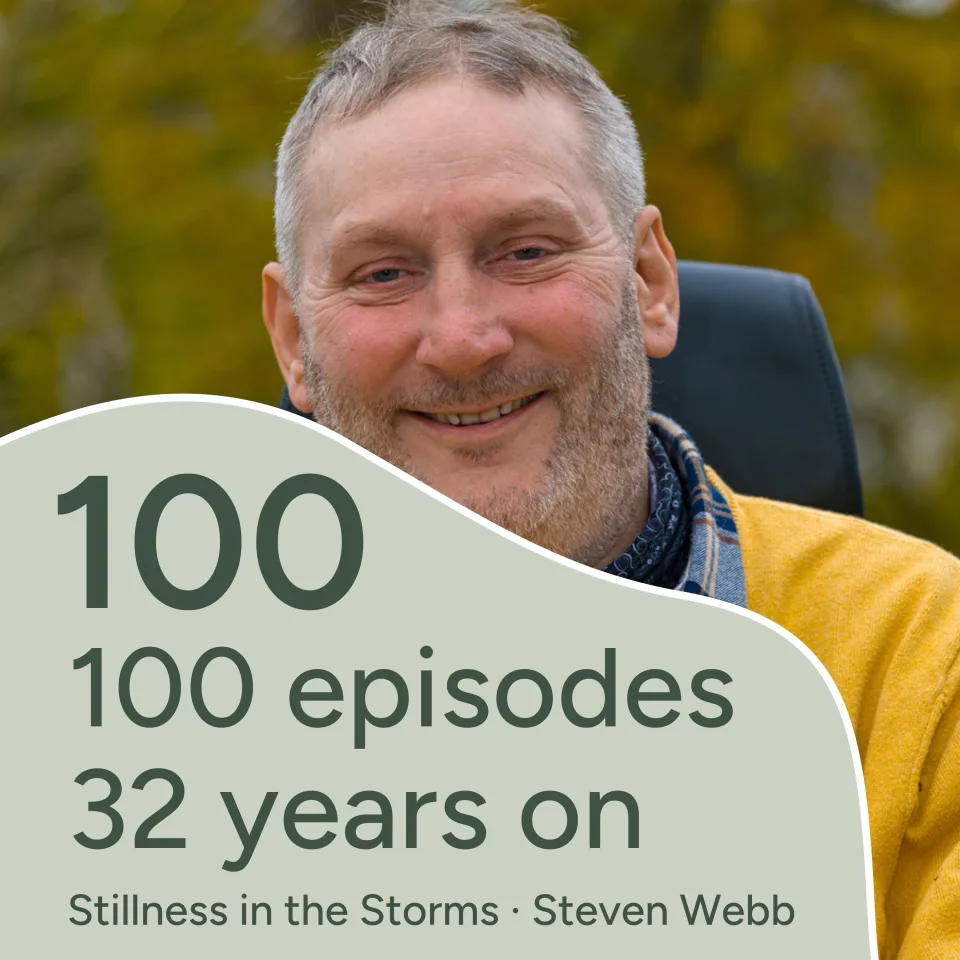
100 Episodes, 32 Years On: The Most Important Message I Have

Have you ever thought about taking your life, or lost somebody who did? This is the most important thing I have to say, and it took me a hundred episodes to say it.

Subject: Steven's Story

Apple Podcasts Spotify

Stillness in the Storms · Episode 100

Have you ever thought about taking your life, or lost somebody who did? This is the most important thing I have to say, and it took me a hundred episodes to say it.

I had been kicked out of sixth form. The first attempt did not work, and I am glad it did not. Then that summer a friend took his own life, and it was the first time I lost anybody. I remember reversing back from the edge and telling myself I would give it another few days. I would have missed my daughter, who is pregnant now, due in January. Men look for more lethal means and men do not talk. Cry. Men cry because men care.

One thing to try: If this is you right now, give it another few days. That is all I did, and it turned out to be enough.

In this episode

  • (0:03) A hundred episodes, alone, just me and the mic
  • (1:58) Fifty years old, and why this one matters most
  • (3:44) Kicked out of sixth form, and the hardest summer
  • (5:06) The first attempt, and being glad it did not work
  • (6:55) The first time in my life I lost somebody to suicide
  • (8:52) Wanting everybody to know I loved them
  • (10:04) Reversing back from the edge, and a few more days
  • (11:41) My daughter, pregnant, and the gender reveal the other day

Support the podcast and join the Weekly Calm: stevenwebb.uk

Thank you for listening.

Steven

The story behind this one

The hundredth episode, and there are no balloons on it. This is the most important thing I have to say and it took me a hundred goes to say it.

It went out on the first of September, exactly thirty two years to the day since I broke my neck. I know the time as well, because I looked at my watch before I dived in.

I want to back up a few months from that dive. I had been kicked out of sixth form the Christmas before, found a job, met somebody, fell hard, and then it ended and I had never felt pain like it. I wanted it to stop and I wanted her to see it. So I bought paracetamol, and then more, and I woke up in hospital. That was the first time, at seventeen. I am glad it did not work.

There is one before that too. I was twelve, on the farm, and my granddad went missing. A few days later we found out he had shot himself. It was the first time I lost anybody. Years later my daughter lost a friend at school, and watching what that did to her was its own thing entirely.

Then I was forty, and I had just found out I had been cheated on. I wrote a letter on the computer and printed it. I wanted everybody to know I loved them and that I was not trying to hurt them. Then I drove out and sat at the top of a bank.

What stopped me was not courage. It was working out that going over that bank in a wheelchair would probably leave me caught halfway down for a day, and I am a bit allergic to pain. And in that gap, one question turned up. What would I miss tomorrow?

What it taught me

I reversed back from the edge and told myself I would give it another few days. That was the whole decision. Not a plan, not a breakthrough. A few days.

I got home before anybody found the letter and I put it in the bin. I stopped at a field on the way and watched rabbits scatter at a noise and then come back and sit down again.

I'll give it another few days.

Everything since then sits on that afternoon. This podcast. Being Mayor of Truro. My daughter is pregnant now, due in January, and I would have missed that.

I'm not crying because of pain. I'm crying because the joy in living does outweigh the pain that comes up sometimes.

Ending it does end the suffering. It also ends every good thing that had not turned up yet, and at the top of that bank I could not see any of them coming.

A word on men, because the numbers are ugly. Three quarters of suicides in the UK are men. Men reach for more lethal means and men do not talk, and when we are anxious or low it often comes out as anger instead.

Men cry because men care.

And if somebody comes to you with this, what you say matters. Not think positive. Not snap out of it. Not you are being selfish, think of everyone you would hurt. Say I am here for you. Say it is all right to feel this way. Say you do not have to go through this on your own. Coming to you at all took more than you know.

Questions people ask

Is this episode too heavy to listen to?

It is heavy, and I say so at the start. Do not put it on in the car or while you are half busy. Make a cup of tea, sit down, and give it your attention, or pick a different episode and come back to this one another day.

What do I do if this is me right now?

Give it another few days, and tell one person. Your doctor counts. So does a friend. You do not have to think it is serious enough to be worth saying out loud, and the not saying is the part that does the damage.

Is it a sad episode?

It is an emotional one, and I got more emotional than I planned to. It is not a sad story though. It is the story of the day I did not do it, and everything that turned up afterwards.

Read along

The transcript

It follows the audio. Press any line to jump there.
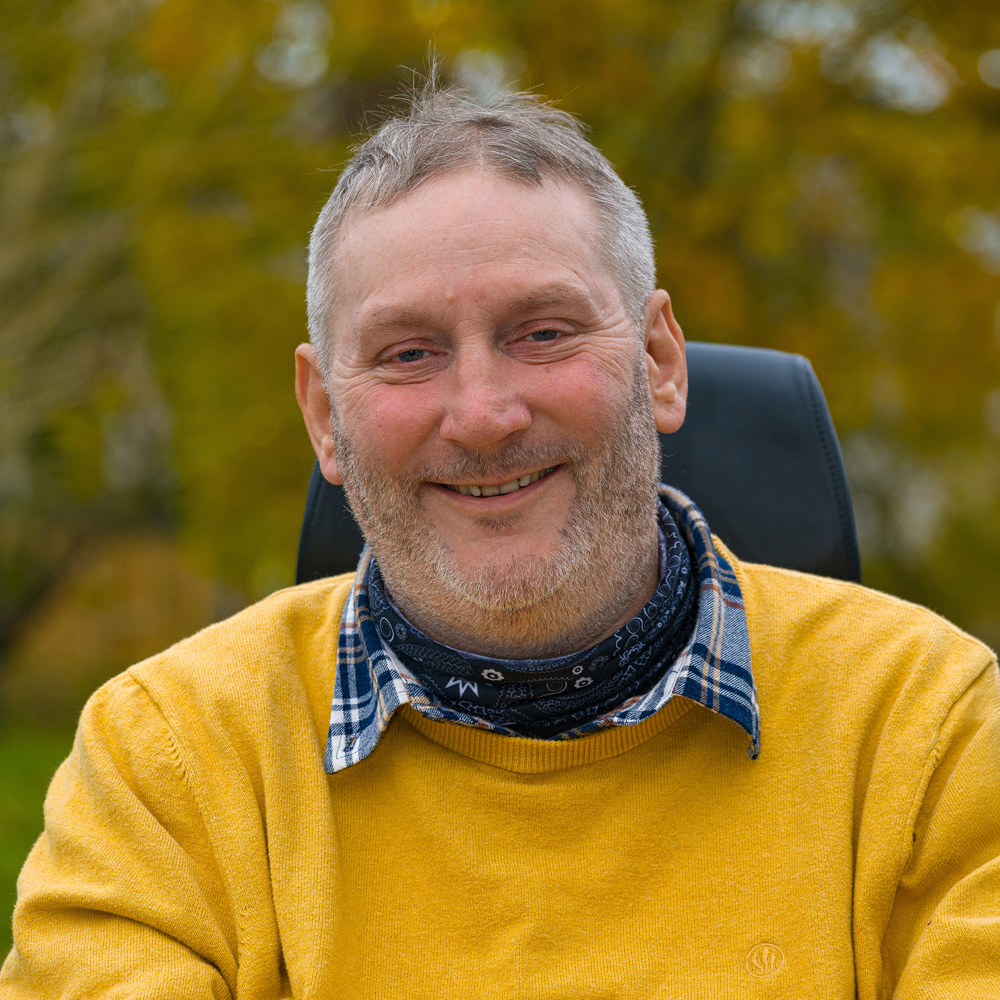
personal-story · suffering · resilience · disability

Read the transcript

So this is the 100th episode of Stillness in the Storms podcast.

A podcast that I've done alone. Just me talking into the mic.

Sometimes the episodes have been a bit interesting. Some of them have been great. Some of them have been a

bit flat. But they've all been real and they've all been me. And this episode, some

people may be expecting a big fanfare, a big celebration. Balloons and whistles. But it's not going to

be. It's going to be something that is deeper and way more important than that. And maybe for you

or somebody else, maybe one day you'll share this episode and it will literally mean the difference between

life

and death. I'm going to share my story and in particular the story of how

suicide has affected me and how I... On more than one occasion have left this house to go and do

it. And one time I was nearly successful. But what I'm going to suggest is it's going to be

a heavy episode, but it's going to be so damn important. So

if you're driving the car or you need to focus or you need to, you're listening to this while doing

something else, I suggest pick a different episode. Pick a random one, 30 or 40 or something like that and

go and listen to that one. Leave this one until a time when you can grab a cup of tea

or coffee. You can sit down, put on a headphones and stick with me

during the story because it's important. It's not a morbid, it's a story of

Ups and downs, but ultimately successes. And the importance and why I'm doing this and why it's so important

to me. I'm now 50 years old and to you if you ever think about taking your life or to

you if you've ever had a friend that might consider it

or to you if you have ups and downs in life. Basically my message is to any

human because humans suffer. We want, we expect, we, you know, we have

feelings. To not suffer is to not have feelings and we spend our lives trying to suppress them in some

way or try to come to terms with them. This episode is exactly 32 years to September the

1st, 1991 I broke my neck. And ended up severely paralysed in a wheelchair as I am today. I don't

feel anything from my nipples down. It's the easiest way to explain it. I don't feel anything from my, just

above my elbows down. My hands are paralysed if someone chopped my finger off and used it to,

I don't know, get into the bank vault like they do in the movies. I wouldn't bat an eyelid.

Especially if I didn't see them do it. I don't feel my hands. I don't feel anything. It

might affect my body a little bit. I might bleed out. But joking aside, I often see children, whenever I

say that, children dig their nails into my hand and always pretend I'm not watching. But they're fascinated by it.

But 30 32 years ago, September the first 10 31 because I looked at my watch before I dived into

the pool and broke my neck.

But I want to back up. I want to back up just a few months because it was one of

the hardest summers. The Christmas before, I'd just been kicked out of sixth form and I had to find

a new way in life and it's quite a long story. It'll be in my book but I got a

job and I met somebody and I was deeply crazy in love and then it went all wrong and

I got my heart broken in a massive way

and I never felt pain like it and when you feel such huge pain

You want to do anything to get rid of the pain. And

not only that, I wanted her back. I wanted her to listen to me. I wanted her to see my

pain. So I went and bought some paracetamol painkillers. I don't know what they call in the States.

And I took one bottle. Didn't really have much effect. I went and bought another one. And in the end,

I took three bottles.

And

I don't remember quite what happened, but I

ended up in hospital. And after two weeks I went to stay with a friend at newkey I sorted my

head out a little bit and we didn't get back together. I'm kind of glad because in those circumstances it

would not have worked anyway probably.

So that was my first attempt.

I'm glad it didn't work. But then I had the summer it's a really hot summer.

And

September the 1st, come along, I went swimming. We went out with all my mates on Sunday evening. We

were jumping and diving into the pool like we did many other nights, and I was been a typical male

showing off in front of women. I was 18 years old at the time. And I dived into the deep

end, and I think I caught my head on the edge of the pool as I went in, and it

smashed the top of my skull and smashed my neck down against my chest, and I broke C5. And

I was instantly paralysed lying on the bottom of the pool. And they dragged me out the pool after a

while because I was a joker. I used to play dead

see how that See where that got me. And over the coming days, it was a really rough

time for me, my parents, family and everybody as to whether I would make it through. I made it through.

I come out of hospital a year later and got on with my life. So at this point, I want

to go back to when I was 12 years old. Just because it's relevant to this podcast. And I can

remember getting my mum getting a phone call from somebody on the farm. My granddad had gone missing. And we

found out a few days later that he shot himself I

It was 1986, five years before I broke my neck. And it was the first time in my life that

I experienced suicide. It

was the first real time in my life that I experienced losing somebody. And I don't think I really, I

don't think it really affected me at that time. I was kind of close to Granddad because I can remember

going bird watching with him and everything. But I was 12 and 12 you don't quite understand the world yet.

Says me at 50. And I understand it less today than I did then. So

those were the two times up until that point that... I had experienced myself almost doing it and losing my

granddad And then the next time I experienced it was when my daughter lost

a good friend at school.

I think 11, 12 years old or something like that. I think the inquest come out that it was suicide.

And that was particularly difficult seeing what my daughter went through. And I don't want to stay there too much

longer because I might get some things wrong and I cannot speak for my daughter. I can't certainly cannot speak

for that situation. But I I share it because it's all part of the same story.

It's all part of human suffering and the way we suffer and the way we sometimes deal with it and

sometimes we don't deal with it.

And moving on to, I was 40 years old

and I just found out that I had been cheated on and it was particularly difficult um

It

was a real kick and over those few days it was a bit blur but I can remember writing a

letter on the computer and I printing out on the printer

saying goodbye.

I wanted everyone to know I love them. I wanted everyone to know that I didn't want to hurt them.

And I didn't

want it to be any painful for them, but I could not stand the pain.

So I left and I sat at the top of the bank and I looked down over the bank and

I thought, do you know what? I'm going to get caught up if I drive my wheelchair over there. I'm

going to end up halfway down and knowing me hanging off something for 24 hours, I'm going to really suffer

and I didn't want to suffer. I'm a bit allergic to pain.

Something at that moment, and this is really important, something at that moment flipped in my

head. And

I just thought, what would I miss tomorrow if I did this?

Yeah, I was in so much pain. I

I was really, really suffering, but what would I miss tomorrow? And I would miss my daughter growing up. I

may miss her getting married go to university, do all these different things. I may miss

a partner, a new partner one day. I may miss all the things because things come and go. And

I can remember reversing back from that edge

And thinking to myself, I'll give it another few days.

I'll give it another few days.

And that

was enough for me to drive home. Luckily I got home before anybody seen the letter. I was able to

throw it in the bin. I remember stopping at a field watching rabbits in the corner of the field playing.

And I noticed the way they would scarper when they heard something and they would come back and just sit.

And

I thought that was fascinating.

And I came home. As I said, I got rid of the letter.

And I was almost in

my in my 40s, as I said.

And I'm here 50 years old now and it's the 100th episode of the podcast. And I wouldn't have done

this podcast if I hadn't made a better decision that day. I would not become Mayor of Truro. I would

not be talking to you today. I would not experience.

Just give me a moment.

I would not have experienced my daughter having her first daughter. Yeah, she's pregnant. It's

due in January. We

had a gender reveal the other day. And think about everything I've done in my life since then. The people

I've touched. The people I've helped. The joys I've had. And

I'm not crying now because of pain. I'm crying now because

the joy in living does outweigh the pain that comes up sometimes

I know it's difficult. It's bloody hard.

It's hard been paralysed It's hard dealing with carers. It's hard been on the city council sometimes.

It's hard watching people, seeing people suffer. To be alive

is to suffer, the Buddha said

how he was right. Three and a thousand years ago we're still like we're still not getting to

grips with this shit yet because

we're human.

And I want to move to some stats. Just very briefly. Men between

45 and 65 have the highest rate of suicide. Men overall are three times more likely

to commit suicide than women.

74 percent of all suicides in the Uk involve men. And

the reasons they say is men look for the more lethal means, you know, such as firearms.

Men don't talk about their feelings. When men are anxious and depressed, it comes over as anger or

irritability. But sometimes it's sadness. Sometimes it's worry.

Middle-aged men experience a range of stressors from financial difficulties, job loss, relationships, and health

issues. They

also sometimes lose parts of their family and things break up. Relationship changes. They may realise

middle age so they didn't achieve what they wanted to achieve. And I'm not going down the men route as

they're more important and we should look at this. I just want to give the perspective from my perspective. Any

suicide of any age, of any sex I just these. Give

it another couple days. Just give it another couple days and talk to someone.

And if someone ever comes and talks to you,

Don't say things like, I'll just think positive.

Say, I'm here for you. I care about you.

It's okay to feel this way. You

don't have to go through this alone.

Don't say snap out of it. Don't say you're just looking for attention or anything like that. Don't say to

them suicide is selfish. Think of the other people you're hurting. You know,

You have to remember the braveness in someone coming to you, especially for a man.

We're of the generation with the you know the the misunderstanding stoicism where we should get rid of our

feelings we should get suppress them you know Be a man. Don't cry oh

fuck that.

Men cry because men care.

Humans feel things deeply.

And I've got way more emotional than I thought I would. And

I'm sorry.

So my message in this podcast is give it another few days. Think of all the things you might

miss out on.

Yes, pain is the most horrible thing. And yes, I don't know your reasons. I can only

say for me and what I've experienced. I can only ever give my perspective. I'm only ever in

my body. But yeah, this shall pass I

know life's not a meme, but some of the memes have weight and they mean some good stuff.

Seek help. Get

your doctor. Say to somebody, do you know what? Even if you don't think it's that serious and you're just

contemplating it but you're not really contemplating just talk to someone, please.

You know, share this podcast with I don't know if this podcast will help or not. I don't know. But

I would not have done so much cool stuff

if I drove down that bank that day.

Or I was successful when I was 17 years old. If those pills would kill me, imagine all the things

I would have missed out on.

And yes, it was the most awful times of my life and I would not want to go back through

them just even for a millisecond.

But the point is you may think that it'll end all suffering it'll do all these things. But it'll also

end the possibility of all the joys that may come in your life.

Yeah, that's my message and I'm sorry it got so heavy and I don't know how much I'll edit out.

I think I'll edit a lot out um because I don't want to make you cry. I don't want to

make you emotional. You know we

being human is tough, right? You

know, we've developed these complex feelings and we haven't developed the tools alongside to go with them.

We are working on it. The problem is, like everything, the tide comes in

before we're ready for the tide to come in. And that's the same with emotions. The emotions are there before

we're ready for them. Humans have evolved this complex set of emotions of pain and sorrow and

sadness and joy and... Happiness and all of these grief and jealousy. All

these things before we've got the tools to deal with them. And you could argue we've got the tools to

deal with them, but we may be talking about this for 3 000 years but 3 000 years in evolutionary

terms for a human or any evolutionary terms is nothing. You

know that's a that's a blink of an eye. It

takes a lot longer than that for these things to really work out. So I feel for you. You're human.

I feel for you.

But we're in this together.

Let's let's recognise each other's feelings a little bit. Let's recognise, you know,

if you're a man, cry sometimes, damn it. You

might find it'll make you feel better.

So look thank you. You've supported me. 100 episodes. How incredible is that? How amazing?

And I'm not apologizing for bringing this 100th episode to a deep...

Really powerful message because I think it's really, really important um I've been waiting to do it.

I didn't think I would get this emotional, but hell, why not? It's what it is. It's who I am.

It's who you are. It's who we are.

Just thank you um All your support it's been awesome. You can get all my links

at StevenWebb.uk. You can support the podcast by going to thankyousteven.com.

The links are in the notes. But that above all that leave reviews. That's really helpful. And

I

love you. Thank you for being there.

Weekly Calm

One calm email.
Every Sunday.

A little space to pause, a practical thought to take into the week, and a reminder that you’re not doing this alone.

Join and I will send you my book, 5 Simple Practices for Inner Peace. Free, and yours to keep.