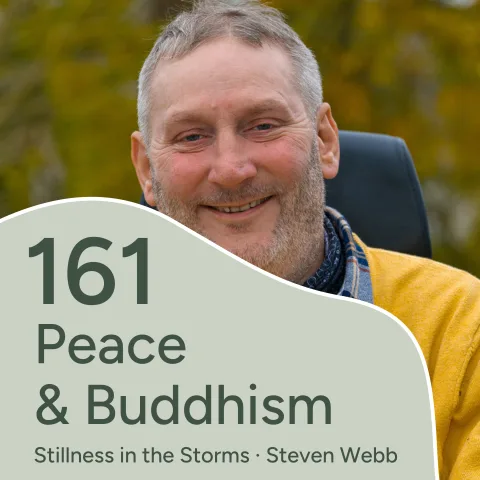
0:06 If you are a regular listener to my podcast, you'll know that I keep saying the odd phrase like this
0:12 will change your life or this will be the most important thing you take away from this podcast. So I'm
0:18 going to talk with today about the most important thing that I've learned when I started my spiritual journey to
0:25 reduce my suffering. Because that was the whole reason I started my spiritual journey. And I didn't know I
0:33 was starting a spiritual journey. I was just suffering really, really badly. And I just wanted to find ways of
0:39 not suffering to the point where I was ready to commit suicide. I was ready to end
0:46 everything just to reduce that constant pain of suffering. And I want to share on this podcast what I
0:54 found and ways I found, the ways I simplified it because it was way too hard for me to do
1:01 it the way everybody else does it, or what seems to be the way everybody else does it. Everybody I
1:07 talk to seems to have a problem, actually, ironically. So that's today's podcast. You know, what had the biggest impact
1:14 on me when I was trying to reduce my suffering?
1:18 Welcome to Stillness in the Storms, the podcast that gives you a different perspective so you can live a more
1:24 peaceful, positive and happier life. I'm Steven Webb, your host, and before I start, I want to say thank you
1:31 to those that treated me to a coffee this week. We got Maureen that's always treating me. Thank you very
1:37 much. And a couple others will want to remain anonymous this week, but thank you. It makes all the difference
1:43 and I really do appreciate it. And if you want to head to my website and either do that or
1:48 download completely free the five simple practices for Inner peace, you can do that, just go to
1:55 StevenWebb.uk or one word V and a double B. And the link will be right below this
2:03 podcast at StevenWebb.uk but I will remind you at the end of the podcast, you don't have to worry about
2:09 doing it now. So welcome to this podcast. You know, when I was 40, I was suffering. I found
2:17 myself single. I found myself really where you're really at the bottom and you cannot sink no lower. I was
2:24 totally,
2:26 totally distraught. I had no money, I didn't know I was going. I was depressed, I was fed up. And
2:33 to the point where a couple of times I contemplated suicide. To the point that at one time I left
2:39 my home to go and do it. And I left a note on my printer saying, I'm sorry, but I've
2:45 got to do this. I cannot. I just cannot do this anymore. The the pain was so great. And
2:52 through Everything. And it's not just about me being paralysed. It's all the other things that come with normal life,
2:58 you know, relationships and wanting to achieve and, you know, trying to be a masculine male and a paralysed body
3:05 and all those other things that you want to achieve. And yeah, you know what? It's like it's there's so
3:12 much pressures nowadays. You know, years ago we had the pressures of just like the local people around us and
3:17 all that, the local towns your local friends. We've got the whole world on our backs now. And we've got
3:21 so much information there's so much stuff. It's just like ah isn't it overwhelming isn't it just overwhelming. It's like.
3:29 I'm going to share with you about meditation, which is the Which is the one thing that changed my life
3:33 more than anything else. I had no idea how to do it. I didn't think I could do it. I
3:38 thought it was impossible. And you just type meditation into Google and you'll get literally thousands of
3:46 different ways to meditate. And I'm going to tell you a different way now. I just needed it simplified. And
3:52 that was my point. And I started reading books and it was the first time I read books in about
3:57 30 years. I stopped reading books about 10 years old, actually, because I was diagnosed dyslexic. And I found it
4:03 really hard. So I thought it was impossible. So I didn't bother. And I faked my way through school. And
4:08 you know, when I used to queue up for that English lesson, I was supposed to read a chapter of
4:13 a book. I would casually strike up a conversation with one of my friends and what did they think about
4:20 the chapter? What did they think about the main point of the chapter and all they would tell me and
4:24 I would just, you know so just made my life easier. I learned to fake it, basically. And I could
4:31 read headlines, so it's not like I couldn't read. I just found reading really, really difficult. So going back to.
4:37 I turned 40 and I hit rock bottom. And I tell you, rock bottom so bad that I got to
4:45 the point where I didn't even feel anything. I didn't care. I didn't think. I just wanted to not suffer.
4:51 And it got so low that I even went beyond suffering to the point where I I was
4:59 just dormant. I just did not exist. I was just waking up and going through the motions. If my carers
5:06 hadn't come in and got me out of bed, I don't think I'd have got out of bed. I would
5:09 have done nothing. I was in deep shame. Deep. Yeah, I was pretty low. I don't know how many ways
5:16 of explained it but I started reading and every single book told me one thing. I'd turn a page and
5:22 go meditation is the answer. And here it was the answer. But I couldn't do it. I couldn't shut my
5:28 mind off, which is what I thought they were all saying to me. I couldn't sit there and meditate. If
5:34 I sit there and meditate now, I sit there I Close my eyes and say, okay. And the moment I
5:40 close my eyes, my mind's like, oh you've got to do this. You've got to do this. You've got to
5:44 go and sort tea out. You haven't replied to that email. I'll go and Just play the game. Just why
5:49 are you doing this? This is ridiculous. And scratch your toe or all kinds of things. The mind is my
5:56 mind does not shut up for like a second, let alone a few minutes for meditation. So I thought here
6:03 the solution is that everybody is telling me, every guru in the world is telling me, and it'll improve your
6:09 mental health and improve your concentration and improve your life, everything. You'll suffer less if you just learn to meditate
6:17 and have a meditation practice yeah here I was. No way. Not me. Impossible. So I
6:25 tried it and I couldn't do it. And I used to go to my weekly and monthly calls with Jun Po
6:32 one of my teachers as a master Sadly, he's passed away now, but his teachings are so alive in me.
6:38 And I used to ask him nearly every week or every month, I can't remember now quite how often I'd
6:44 get to ask him a question. But I used to say, am I meditating right? He used to say, just
6:51 shut up and sit down. Just used to go stfu stfu stfu
6:58 shut the up. And that was it. Just sit there and go stfu stfu And I wouldn't get it.
7:06 Literally, he would come back every week and he would say that to me again and again. Just Steven just
7:11 sit down and shut up.
7:13 Just listen. And I wasn't getting it because I thought there was a right way of doing it. Now, of
7:19 course there's wrong ways to do a meditation, but if you want to have a little less suffering, if you
7:25 want to just, ah, just, you know, relax, just forget meditation. Forget
7:33 this Holy Grail of sitting down and silencing your mind. You can silence your mind. Your mind was designed to
7:40 think, designed to keep you alive, designed to make up all kinds of stuff about your current environment, to take
7:46 notice of stuff, to bring it to your attention, to do all These things. It won't shut up.
7:52 You know, asking your mind to shut up is like asking your heart not to beat.
7:56 It's not a good idea.
7:59 You know, you're dead. If you want a silent mind, you're dead.
8:03 That's it. Your mind is not going to get quiet. And even if you have a peaceful moment, your mind's
8:09 still doing lots of other things.
8:12 It's just whether you're aware of it or not. That's the point.
8:16 So what do I do and what is my practice? My practice is checking in as many times as possible
8:22 during the day and just spending a couple of minutes. Just when you get to somewhere or when you pull
8:28 up the car or when you go somewhere, just
8:31 try to get there a couple of minutes early. Try to leave the house and just on the way somewhere,
8:36 pull over and just stop for a couple of minutes and just take a breath and just check in. And
8:43 it's a simple check-in Just go, how am I feeling? And
8:47 like I can ask myself now, how am I feeling? I'm feeling anxious. I'm feeling like I want to get
8:52 this podcast and get it all out and I'm going to forget things and I'm not going to get it
8:56 all over and I'm not going to be able to articulate it in a perfect way for you
9:04 to be able to get what I'm saying and I'm going to skip the notes and things like that. So
9:09 I'm anxious well that's what I feel
9:13 I'm feeling really excited about a meeting I've got tomorrow that I cannot say anything about at this point.
9:21 I'm meeting someone really important and it's confidential I'm excited and terrified comes
9:29 part of my job um But yeah, I'm anxious about that But I'm also excited because it could really lead
9:36 to something and it could lead to something for Truro and to help other people and to help with different
9:44 things. So what else am I feeling?
9:48 My hands are hurting today. They're really. I got some root pains in my hands. I'm paralysed just below the
9:54 neck, if you didn't know and My arms and hands are paralysed as well. And my hands are really hurting
10:01 today.
10:04 So my mind's racing, my heart's probably beating a little faster it should be and
10:09 that's it. That's what's happening inside of me now and what I can do after the check-in I can go.
10:16 Thank you.
10:17 Thank you for letting me know.
10:19 I don't have to do anything with it. And I think this is really important.
10:24 I'm feeling anxious. I don't have to do anything with that. My mind's racing. I don't have to do anything
10:28 with it.
10:30 You know, I'm a little excited about tomorrow's meeting. I don't have to do anything with it in the moment.
10:35 And when you realise you don't have to do anything with these things, you can just be with them and
10:40 go, ah.
10:42 So it's like shining a light on it. It's like um being in a room and you're wondering what that
10:47 is over there in the corner on the floor, and you shine a light on it and it turns out
10:52 it's just like a coin or something. Before that, you thought it was a beetle or something you're sort of
10:57 like I don't need to do anything with it. Now before that, you think you've got to do something with
11:02 it because it might be something that's going to hurt you or hold you back or something that's going to
11:08 make things worse for you. So that's very often with our thoughts and our feelings, we feel like we have
11:15 to do something with it. And that's the beginning of my meditation. And then I spend just. If I've if
11:21 I've got a couple more minutes, I'll just spend them just observing what comes up. Oh, there's the thought
11:28 there's another one. There's a sound. I just heard the birds
11:33 um I don't know if you can hear them, but the birds are just flying over. I
11:39 don't have to do anything with the birds. Just acknowledge them and go, ha. Flying how It's late in the
11:46 afternoon
11:49 oh There's a feeling in my right hand right now, like a. Like a sharp pain. Go through it. I
11:55 don't have to do anything with it.
11:57 And these things come and go. And I think that's the point of my meditation. And it's just the awareness
12:04 meditation. There's hundreds of different types of meditation. Find what you want, what helps for you.
12:10 But what I'm saying is, don't try to dismiss meditation because you cannot do it. Just start with the simplest
12:18 of meditation is Just literally, don't even call it meditation. Just call it timeouts.
12:24 I'm going to sit there and observe. I'm going to sit there and just become aware of what's coming up.
12:29 And if you find becoming aware of what's internal in your body difficult, just sit there and become aware of
12:35 the clouds.
12:37 Become aware of the temperature, the weather. Become aware of the sounds.
12:41 Sounds is a beautiful one because there's nothing you can do with the sounds. You try blocking them out. You
12:46 can do that. You try bringing yourself more attention to them. You can do that a little bit. You just
12:53 listen. Like now, right now, what can you hear?
12:59 What can you hear beyond this podcast? Beyond my words appearing and then disappearing and the silences between them.
13:06 What can you hear outside right now?
13:12 Pull the car up and just go, what can I hear the furthest distance I can hear. And every time
13:19 you hear something, can I hear something further away? And now just relax the body. It'll give you. It'll give
13:26 you this little moment of gap between what's arising and what you do with it and deciding whether you do
13:33 anything with it. And that's the holy grail of meditation. It's bringing up that muscle
13:40 of being able to see what's arising and whether you do anything with it or not. And very often,
13:48 99 of your thoughts, you don't have to do anything with. You
13:53 don't have to do anything with most of what's going on inside of your body, what's going on outside the
14:00 world. You're not in control of it. You're not in control of your next thought. You're not in control of
14:05 how your body's feeling yet. We're trying to organize it. We're trying to control all these things constantly, and we
14:12 just cannot. We're not in control of it. You know, it's like sat there and trying to control your thoughts
14:19 is like sat on a bench um on a busy road trying to control what colour cars turn up around
14:27 the corner. Well, you're not gonna. You're not in charge of that. You know, that's way above your pay grade
14:33 to be in charge of what colour cars That's some. I don't know, in the universe somewhere, perhaps there's somebody
14:38 up there that's actually got that job somewhere in the universe on some planet millions of miles away, controlling what
14:45 kind of cars come down the road. I very much doubt it. But, you know, how do I know how
14:51 the universe works is way above my big rate But the point is, you're not in control yet. You're trying
14:57 to be. I didn't like that. I didn't like that noise. I didn't like that kind of Colour I didn't
15:02 like that. Okay, you might not sit on a bench or judging cars, but it's a really good metaphor for
15:09 you're judging your thoughts as they come and go you I don't like that one. I don't want this one.
15:15 Where did that one come from? And we get on them, we're literally getting in that car that we don't
15:21 like, and then we're complaining that we're in that car. That's the reality of our lives. We have a thought,
15:29 we get on it, we ride that thought and we make it worse and worse and worse. That's like getting
15:35 in the car, stopping it as it drives past us. We get in the car and then we're complaining to
15:41 the driver that when we're in the car. Don't like this car. I don't know why he's here You know,
15:46 it really annoys me whenever I. Whenever I'm in this car. It really annoys me. No that's that's what we're
15:53 doing.
15:54 So what changed my life? It's observing my thoughts, observing my feelings, and realising I don't have to do anything
16:01 with it.
16:03 Wow, what a difference like uh-huh so what what does that practice look like for me? Well, it literally looks
16:10 like what I've just told you, just stopping and taking time out. If you see me driving around chair in
16:16 my electric wheelchair, you'll see me sometimes sat next to a bench, or just sat there watching cars, or just
16:22 sat there talking. Just whatever I'm doing, just taking a little time. Doubts. Sometimes I get distracted by
16:30 birds or something like that, or um you know, whatever's around and I just sit there and watch it, and
16:36 that's it. But that little moment is often why I'm late everywhere, probably. But those little timeouts are enough.
16:44 And
16:46 I gotta be honest, I have councillors you know, when I'm chairing a council meeting pretty difficult for me because
16:51 I train myself into. I don't have to do anything with that. And then the council of meetings, they're throwing
16:56 stuff at me and they're expecting me to do something with it, which is like the opposite end of it.
17:02 So I ought to do something with this. You know, he's asking me something even in there. Sometimes I don't
17:08 have to do anything with it. And it's that. It's that little bit of a gap between
17:13 what's been thrown at me and whether I need to do something with it.
17:18 So you think today of how many times you've had thoughts and you've gone with them and you didn't need
17:23 to. Or how many times you've had feelings and things like that, and you've really doubled down on them rather
17:29 than just let them go. And that's what I think meditation is about. You know. Why complicate things?
17:36 Just find that little bit of stillness. Just find that. You don't even have to find a bench in the
17:41 middle of nowhere beside a river. That's a lovely, peaceful area in a lovely forest with loads of birds chirping.
17:49 No, you can literally be in the most busiest town on the busiest road and still sit there and go,
17:56 huh, I don't have to do anything with these cars. I don't have to do anything with these thoughts. You
18:04 know, the external world the internal world are the same thing. They really are. They're not different.
18:10 They are different. They're not different. That's the paradox.
18:14 You know, we're trying to. We get really annoyed by the internal world, but it's just happening to us.
18:20 You know, the thoughts and feelings are happening to you. You're not in control of them.
18:26 You know, when you realise that, it's like, really?
18:30 And when you get it, it's so. It's so simple that we've complicated it for such a long time. It's
18:38 not complicated we because we suffer so much, because we think the Holy Grail is out there and there's some
18:46 kind of magic formula and there's some kind of thing. We're looking for. We're looking for the five ways, simple
18:52 ways to find inner peace. You know, download my book from my website. You know, that's quite simple. It's. Get
18:59 more sleep. Take timeouts. You know, use mindfulness. There's little tips and techniques on improving
19:07 those. You know, you can have really effective timeouts, or you can have really ineffective ones. But above all, just
19:14 simplify.
19:16 And the more you simplify, the more you stop trying to read blogs, and stop trying to go to podcasts,
19:22 and stop trying to do all these different things. And Looking for that one thing that suits you. Just stop.
19:32 Simplify things. Untangle the knot.
19:36 You know, realise you don't have to do anything with it.
19:39 And that's the thing that stopped. That's the thing that changed my life massively.
19:44 I have a thought. Wow. It's just a thought.
19:47 You know, If I don't hang on to it, it'll be gone in 10 seconds and I won't ever remember
19:52 it again. Sometimes I have the most crazy thoughts that I could never even put out in public. And
19:59 luckily, I don't hold on to them long because I'd probably get in trouble if anybody could look at my
20:05 face and see what I was thinking. You know if you ever driven down the road and thought something and
20:10 it would hurt people? It would be awful. You Know if you did that, it's just your mind thinking of
20:17 scenarios to protect you and protect others. It needs to think of it in order to stop you doing it.
20:23 Like very much when when the mum says, don't fall out the tree, they have to visualize falling out the
20:30 tree in order to stop, you know, doing it. So that mum thinks, ah, I hope he don't fall out
20:37 the tree. I must tell him not to fall out the tree. So it makes scenarios up.
20:44 That's what the mind does.
20:47 That's how the mind keeps us alive and healthy and, you know, but we end up putting too much weight
20:53 on them. That's the thing. I
20:57 hope this helps. If this helps in any way, please give me a review. Reviews on Apple are absolutely awesome.
21:03 If you do that, you will be my best friend
21:08 if you leave a review, wherever you, wherever you listen to my podcast, if you give it stars or follow
21:16 it or whatever the button is, I don't know, you know, if it's on Spotify, follow it. If it's on
21:22 Amazon, podcast, I don't know, like it or something. And if it's on Apple, you know, give it a five
21:27 star. No, give it any stars. If it's only one and worth one, give me that. And then at least
21:34 I will know whether or not where I need to improve and where I need to not improve. So,
21:42 and if it's worth five stars, give me five stars as well. But if you want to have a little
21:48 more peace of mind, if you want a little more um wisdom and a little more positivity and all that
21:55 in life, just realise what you, what you have to do something with and what you don't. And the first
22:02 step in that is just sitting down and observing. Watching the cars for a little longer, watching the thoughts for
22:10 a little longer, shining a light on those feelings and thoughts without actually doing anything with it. You
22:18 know, the light is very much one way. When you shine a torch on something, it's literally just shining a
22:24 light on it and that's it, that's done, job done. It's a one-way thing
22:29 Look at it, observe it, see it. It's a one-way action You don't have to bring it back with you
22:35 and make things worse, which is so often we do. So
22:41 forget meditation, just time helps. And observe what's going on. Ask the question, what's happening what How am I
22:49 feeling? What are my thoughts? What's happening? And don't do anything with them. So head over to
22:57 StevenWebb.uk thank you for the support. You are awesome. I love you and have the most amazing week.
23:04 Bye.